


NOVIDARO Method

Five stages, one axis: the individual.

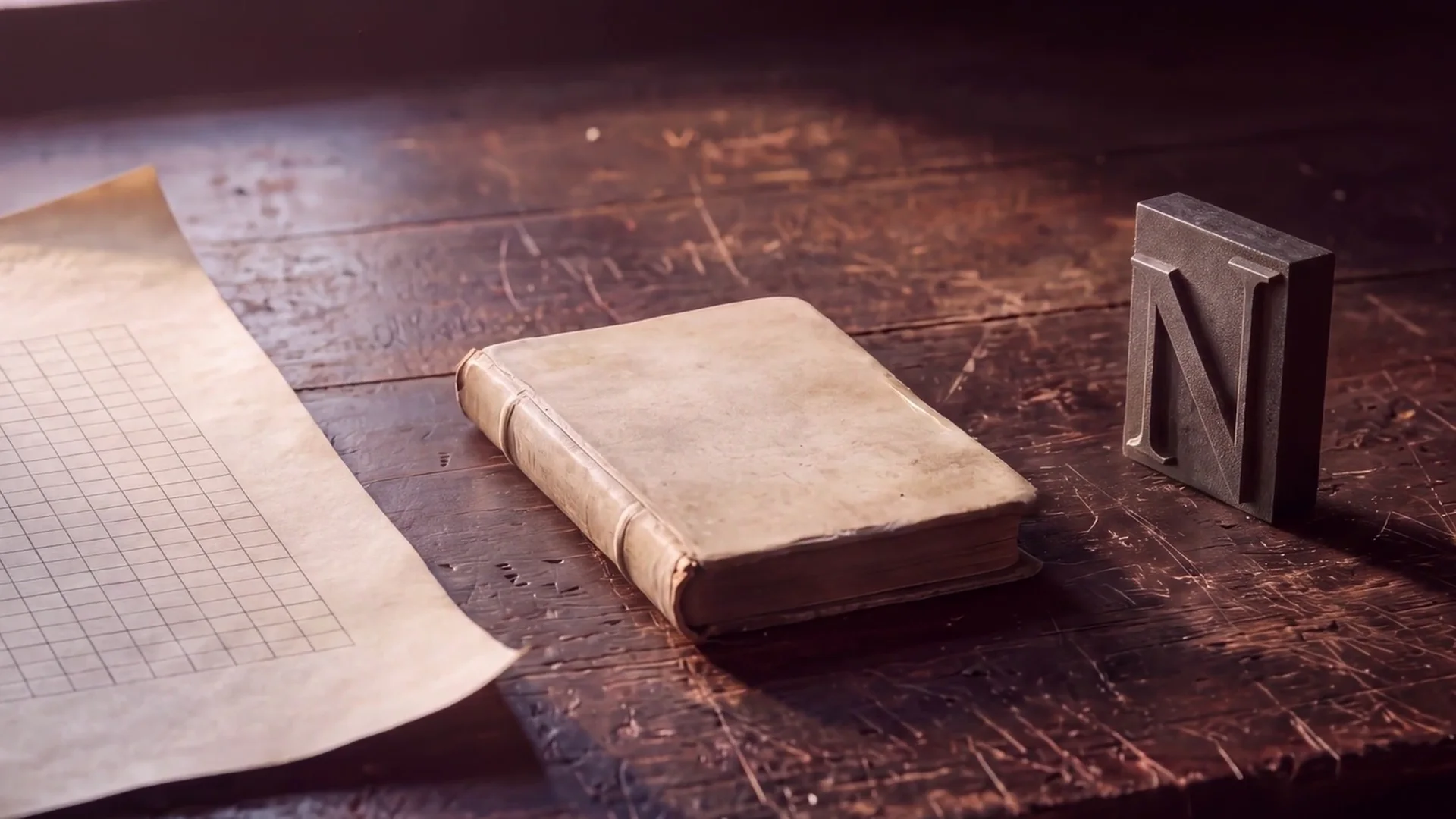
Born of practice, the method organizes the session without stiffening it. Three figures tell how that happens: two of them come from northern Italy, fifteen centuries apart. The third is at the top of this page, in the N of the brand.

A grid · The portable book · A letter

How the method works · The five steps
  1. 01Observe
  2. 02Probe
  3. 03Exemplify
  4. 04Realign
  5. 05Anchor
Full read · about 10 minutes
If you're curious and detail-oriented, and want the full experience the mentor designed to walk you through the OPERA Method, keep scrolling.
Summary · about 2 minutes
If you just want the mechanics of the OPERA Method, the summary covers how each step works.
Go to the summary
Before the steps

The three figures

The five stages of the OPERA Method, anchored by the three symbols that bring them to life.

Malha ortogonal do Graticolato Romano, com um quadrado marcado em azul lápis
A gridThe Roman graticolato, the grid Roman surveyors laid over a plain in northern Italy to order the land before settling it.
01 · 02Observe · Probe
Volume encadernado em couro, de formato pequeno e em pé, com nervuras e douração na lombada, onde se lê VIRGILIUS ALDI
The portable bookPrinted in Venice, small enough to travel with you anywhere.
03Exemplify
A letterThe NOVIDARO icon.
04 · 05Realign · Anchor

Two were born in the Veneto, fifteen centuries apart but only a few steps apart on the map; the third is not inheritance, it is signature, and it is born on this page. In the order in which they appear, the three tell exactly what the method does: first you read the terrain, then you receive what others have already lived, and finally you learn to stand on your own.

There is a thread stitching the three together, and it is not about haste: it is about the right moment. Measure before occupying, understand before advising, plant your feet before climbing.

“I did not create the method to put conversations in a cast. I created it to make sure that every session makes you see what is not yet clear, and that every cycle turns that reading into practice.”

Murilo Pachioni · mentor
Act I ·
Observe & Probe
2 stages · 01 · 02

A grid · the Roman Graticolato

Some two thousand years ago, in the first century BC, before occupying the plain northeast of Padua, the Romans did something that seems obvious today and was, at the time, a novelty: measuring and dividing the land before occupying it.

The surveyors traced an orthogonal grid over the territory, the graticolato: two main axes at right angles.

1
The grid came before any road, house or crop: order first, occupation after.

The design worked so well that it is still there: twenty centuries later, the roads and boundaries of the region still follow the same lines. At the heart of that grid lies Borgoricco, which today houses the museum dedicated to Roman centuriation.

The first two stages of the method do to your context what the surveyors did to the plain. Observe reads the terrain. Probe draws the lines that organize it.

DECVMANOCARDOCENTVRIA · 20 × 20 ACTVS · ~710 M DE LADO
The Roman graticolato · the grid before occupation, Borgoricco at its center

A map of the environment, before the route.

Observe

What changes for you

You start seeing yourself from the outside, and a diffuse discomfort becomes a picture you can analyze. It is emotional intelligence turning into practice: recognizing your own reaction, and that of others, in time to choose what to do.

The reading stage. The mentor observes your context: environment, career moment, patterns of behavior and what the organization actually values. Before any advice, the picture has to be legible.

Example in practice

Together we build the map of your environment: who decides, who influences, where the risks are and where your room for manoeuver lies.

premise

Reading the context before acting, in line with the mentoring functions described by Kathy Kram (Mentoring at Work, 1985).
Probe

What changes for you

You identify the right problem, and the difficult decision simplifies once the question is well posed.

Questions that structure the problem before any answer. The aim is not to test you, but to separate the essential from the incidental and to expose assumptions that were going unnoticed.

Example in practice

Faced with an invitation to take on a team or move to another area, the questions separate discomfort with the current position from genuine attraction to the new one: they are different problems, with different decisions.

premise

Asking before answering: the Socratic method in the service of diagnosis, to understand the right problem, not to test you.

At the end of these two stages, the situation has stopped being scenery: it has become a map. But a map shows where you are; it does not walk for you. For the next step, we have to come down from the plain to Venice.

Act II ·
Exemplify
1 stage · 03

The portable book · the Aldine device

Fifteen centuries after the graticolato, a short distance away, a publisher named Aldus Manutius (c. 1450–1515) changed the way knowledge was handled.

Until then, books were large, heavy volumes that needed a table to be handled. In 1501, Aldus’s press published Virgil’s Opera in octavo format, the first of a series known as libelli portatiles, portable books.2 Knowledge, which before required you to go to it, began to travel in the hands of the reader.

Exemplify does this with executive repertoire. The mentor does not hand over off-the-shelf theory: he transfers lived situations, tested practices and models of action in the face of a real problem. An experience that becomes yours, adapted to your style. Portable repertoire, like Aldus’s book.

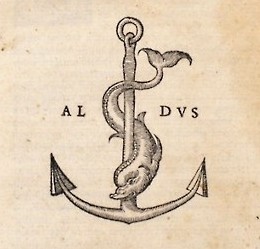
From 1502 onwards, Aldus began printing his emblem on the volumes, a dolphin coiled around an anchor, with a motto in Latin: festina lente, make haste slowly.3 It is not praise of slowness. The dolphin is speed; the anchor, steadiness; the motto asks for both at once.

Marca tipográfica de Aldus Manutius: um golfinho enrolado numa âncora, ladeado pelas letras AL DVS, em xilogravura original
The Aldine mark · Aldus Manutius's dolphin and anchor

Portable repertoire. In italics, as tradition demands.

Exemplify

What changes for you

You gain options for action you did not have, without becoming a copy of anyone.

The mentor transfers executive repertoire at the moment it makes a difference: lived situations, tested practices and models of action applicable to your case, not off-the-shelf theory.

Example in practice

Before a difficult conversation, with a peer, with senior leadership or with someone on your team, we rehearse: structure, language, anticipation of reactions and what to do if it goes off script.

premise

Transferring lived experience at the right moment: teaching by showing how it is done, and not only by telling. It is what the mentoring tradition calls showing (Aubrey and Cohen, Working Wisdom, 1995).

Map read, repertoire received. What is missing is what no borrowed object resolves: the direction you choose, and what stays standing when the mentor leaves the stage. The third object comes neither from Rome nor from Venice. It is in the signature of this page.

Act III ·
Realign & Anchor
2 stages · 04 · 05

A letter · the signature N

Look closely at the N in NOVIDARO. The right-hand stem does not end where the others end: it sets a new level of height, held up by itself.

It is not chance. It is the drawing of the result the method pursues.

Realign turns the map into direction: decisions taken, priorities ordered, next moves with observable milestones. Anchor secures what worked until it holds without the mentor.
This is where Aldus’s anchor keeps its promise: steadiness is not the opposite of movement, it is what makes movement safe. It is also the form resilience takes here: it is not enduring more, it is deciding well again after the setback. Anchored below, you rise beyond the previous line without falling.

It is the point at which the stem passes the line and holds itself up on its own.

The NOVIDARO N · the stroke that sets a new level

The stem that holds itself up.

Realign

What changes for you

You leave the session with an actionable plan and criteria you can defend.

Reading and repertoire become concrete direction: decisions taken, priorities ordered and next moves defined, with observable milestones.

Example in practice

A plan for the next ninety days: what to prioritize, what to refuse, which conversations to have and in what order.

premise

Turning reading into concrete direction, with observable milestones.

Anchor

What changes for you

You keep what you built when the cycle ends. Not depending on the mentor is not a side effect: it is the stated objective.

The progress is consolidated into sustained practice. What worked becomes habit; what did not work is reviewed without drama. It is the stage that stops the cycle from evaporating.

Example in practice

In the cycle review, we compare today’s observable behavior with that of the beginning: what changed, what holds without the mentor and what still needs attention.

premise

Consolidating the learning and handing autonomy back: the redefinition phase described by Kathy Kram (Mentoring at Work, 1985).

Observe · Probe · Exemplify · Realign · Anchor

In Latin, opera is the plural of opus: the works, and the labour that produces them.

“Stay curious just a little bit longer, and rush to action and advice-giving just a little bit more slowly.”

Michael Bungay Stanier · The Coaching Habit, 2016

The line sums up the book: turning the question into a habit and holding back the urge to solve before understanding, what Stanier would later name the “advice monster” in The Advice Trap (2020). Aldus’s motto arrives at the same place through the opposite door: festina lente does not praise slowness; it asks for the dolphin and the anchor together, speed steadied on something solid. Stanier holds back the urge to advise; Aldus, the urge to run without ballast. The method practices both: it understands slowly in order to act firmly, without collapsing.

Behind the metaphors

Foundations

The metaphors serve memory. The basis comes from elsewhere: from practice and from a consolidated body of knowledge. The NOVIDARO Method is its own, and these are some of the works it engages with.

Kathy Kram · Mentoring at Work, 1985

The academic basis of the field. It describes the functions a mentor performs and the phases the relationship passes through, from initiation to redefinition, when the mentee no longer depends on the mentor. It anchors Observe and Anchor. Available in English only.

David Clutterbuck · co-founder of EMCC Global

The school of developmental mentoring: the mentor uses experience so that the mentee grows and goes on without them, instead of using power to promote them. It anchors the objective of the whole method.

Robert Aubrey and Paul Cohen · Working Wisdom, 1995

They describe the mentor’s techniques, among them showing: teaching by showing how it is done, and not only by telling. It anchors Exemplify. Available in English only.

Michael Bungay Stanier · The Coaching Habit, 2016

It argues for holding back the urge to answer and sustaining the question for longer. It anchors Probe. Portuguese edition: Faça do coaching um hábito, Sextante, 2019.

Lois Zachary and Lisa Fain · The Mentor’s Guide, 3rd edition, 2022

They treat the relationship as learner-centred rather than mentor-centred, and closure as a planned stage, not a failure. It anchors Anchor. Available in English only.

W. Brad Johnson and Charles Ridley · The Elements of Mentoring, 3rd edition, 2018

They condense the empirical research on mentoring into verifiable practices, from the start to the close of the relationship. Available in English only.

Paul Anwandter · Manual de Mentoring Profissional, 2018

A practical reading in Portuguese, by the president of EMCC Latam. The Portuguese edition was published in Chile; there is no Brazilian edition.

First move

Start with the grid.

That is what the first conversation is for: understanding your terrain before any advice.

Book a conversation
Due rigor

Historical notes

  1. The centuriation northeast of Padua, the so-called Roman graticolato, is dated to the second half of the first century BC and is among the best preserved in Italy: the grid still guides roads and boundaries in the region. Borgoricco, at the centre of the grid, houses the Museo della Centuriazione Romana. Each centuria measured twenty by twenty actus, about 710 metres on each side.
  2. Aldus Manutius published Virgil in octavo format in Venice in 1501, a landmark of the libelli portatiles series. The italic type used in those editions was cut by Francesco Griffo, whose roman types served as a reference for Claude Garamond’s punches in the sixteenth century. The typeface used on this page is EB Garamond, a digital revival of Garamond’s romans, based on the 1592 Egenolff-Berner specimen, which descends from that lineage. The italic comes from another hand: it is based on the types of Robert Granjon, and what links it to Aldus is the invention of the italic as a device, not the drawing of the letters.
  3. The emblem of the dolphin coiled around an anchor, with the motto festina lente, identifies the Aldine editions from 1502 onwards. According to tradition, the image reached Aldus through an ancient Roman coin, a gift from the humanist Pietro Bembo: the dolphin for speed, the anchor for steadiness.